
Witnessed net outflows of Rs 8 crore.


Earlier, most investors counted on traditional options like fixed deposits, gold, or property. But in 2026, you will have access to a much wider range of opportunities across different markets and sectors.

Listed capital market companies in India delivered strong fourth-quarter earnings growth, with a universe of 12 firms posting 30 per cent year-on-year revenue growth and 19 per cent earnings growth in Q4FY26, despite mark-to-market (MTM) losses impacting headline profitability for some.

Equity mutual funds attracted Rs 39,688 crore in January, driven by sharp inflow in small and midcap schemes, even as market volatilities continued. However, this was 3.5 per cent lower than the net inflow of Rs 41,156 crore registered in December.

They help diversify portfolio and are less risky.

Gold's glittering rally is expected to continue, with prices likely to climb towards $4,500 per ounce in overseas markets, supported by sustained global central bank purchases, persistent geopolitical tensions, and strong Asian demand, according to a report by Motilal Oswal Financial Services Ltd. Silver, which has outperformed gold in terms of returns so far this year, is projected to climb to around $75 per ounce, aided by robust industrial consumption and a widening supply deficit, the report said.

'Increasingly, they treat gold as a financial asset in their portfolio rather than just as jewellery.'

Net inflows into equity mutual funds (MFs) moderated for the second straight month in September, declining 9 per cent during the month to Rs 30,422 crore. The slowdown came as redemptions from active equity schemes rose 30 per cent month-on-month (M-o-M) to a one-year high of around Rs 36,000 crore.

'While investing in a silver ETF, one should be aware that it has historically exhibited higher price volatility than gold.'

To help mobilise idle gold in households.
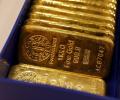
Gold prices advanced Rs 700 to reach a new lifetime high of Rs 91,950 per 10 grams in the national capital on Wednesday on the back of continued buying by jewellers ahead of wedding season, according to the All India Sarafa Association. Besides, increased tensions in the Middle East and concerns about the US economic slowdown have kept the demand for safe-haven assets intact.

Gold prices dropped by Rs 4,100 to Rs 121,800 per 10 grams in the national capital and slipped below $4,000 an ounce in the global markets on Tuesday as easing US-China trade tensions dampened safe-haven appeal. According to the All India Sarafa Association, the precious metal had closed at Rs 125,900 per 10 grams on Monday.
Passive funds appeal to investors seeking to avoid the risk of underperformance by the fund manager and minimise the need for frequent chopping and changing of funds.
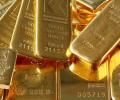
As the rally in precious metals takes centre stage in 2025, most analysts recommend a larger allocation to gold over silver despite the latter's outperformance this year. In the current calendar year (CY25), spot gold prices in dollar terms rallied

Insights from behavioural economics suggest that an ambitious nudge can be effective if three conditions are met, points out Ram Singh Insights from behavioural economics suggest that an ambitious nudge can be effective if three conditions are met, points out Ram Singh, director, Delhi School of Economics.

New investors should gradually build a 5 to 10 per cent allocation to gold.
Provision to invest in gold deposit schemes introduces credit risk to such funds
Now that the gold exchange traded funds (GETFs) are being sold in the market, let's look at a few things to understand them better.
The pros and cons of investing in gold coins and bars, jewellery, gold ETFs and gold mining stocks.
At present there are two types of gold related funds available in country

New investors should not allow themselves to fall prey to FOMO and rush headlong into gold.
Rising gold prices and continuing investment flow in yellow metal has pushed the size of assets held through gold exchange traded funds to an all-time high of Rs 11,198 crore.

Bitcoin has fallen from its peak of $1,26,251.3 on October 6, 2025, to $65,405.5, a decline of 48.2 per cent. Investors must recognise that sharp volatility is inherent to Bitcoin and avoid kneejerk reactions.
Though gold ETFs are traded on stock exchanges, they are taxed at a higher rate.

Inflows into gold exchange-traded funds (ETFs), which manage a total of Rs 37,390 crore, have surged sharply in recent months. This trend is likely to continue, especially after the reintroduction of long-term capital gains tax (LTCG), which is likely to attract smart money into mutual fund offerings amid a robust outlook for the yellow metal. Smart money, also known as opportunistic flows, refers to strategic investments that are generally of a short-term horizon.
In their short history, Gold ETFs have been quite successful in capturing investors' fancy. It must be noted that while ETFs as investment avenues may not be very popular among investors, it is the Gold ETFs segment wherein the interest is palpable. The fact remains that Gold ETFs are like any other investment avenues and have their fair share of pros and cons. This in turn highlights the need for investors to properly evaluate the Gold ETF option.

'The pace of gold's ascent is striking, with prices rising from $3,500/oz to $4,000/oz in just 36 days -- far quicker than the historical average of 1,036 days taken to achieve similar $500/oz gains.'

Mutual fund industry extended its bull run in 2025, adding a staggering Rs 14 lakh crore to its asset base and pushing total AUM to a record Rs 81 lakh crore by November, powered by surge in retail participation and record SIP inflows. Venkat Chalasani, chief executive officer of AMFI, told PTI that the industry's outlook remains positive, with steady SIP inflows continuing to offset foreign portfolio investor outflows and strengthening market resilience.
During April-July, the investor-base in gold ETFs expanded 24 per cent.
"We are now looking at a new fund under the gold category, which will enable small investors to subscribe to the units from the offices of UTI, without even having a demat account," said sources at UTI Mutual Fund. "With the equity markets rising by almost 30 per cent between mid-March and April, investors are no longer interested in gold ETFs. Also most Indians prefer holding physical gold, rather than gold ETFs," said a broker.

Commodity investments can help you diversify your portfolio in asset classes other than equity and debt, says Dwaipayan Bose.
Move over equity markets, mutual funds and bonds. Investors across India are these days picking up and trading in the latest investment avenue in town: the Gold Exchange Traded Funds.

The decision was taken in view of significant rise in imports of gold in recent years putting pressure on current account deficit.
Reliance Mutual Fund and UTI Mutual Fund have applied to Sebi to start schemes that will collect money directly from investors and buy units in Gold Exchange Traded Funds. Though at a slightly high cost, these schemes take away the hassle of maintaining demat and trading accounts with brokers. "These two factors were the biggest hindrance for gold ETFs," said Devendra Nevgi, ex-CIO, Quantum Asset Management. Nevgi started the gold ETF at the fund house.

Paper gold saves your investments from volatility, and you from hassles that come with the physical form. The chance of good returns gives that extra shine.

When we talk about Exchange-Traded Funds (ETFs), a few of their features that strike our mind are their low cost, easy-to-understand composition, and simple trading. While Index ETFs have always been popular among investors, Gold ETFs have garnered interest in recent years due to gold prices fluctuating near their all-time highs. But from a long-term investing context, do these ETFs really deliver?

While the regulators -- Sebi and RBI -- are yet to issue guidelines, gold ETFs certainly look more promising.
With gold prices on the rise, financial institutions are trying different ways to attract the customer.
You can do so through physical gold (coins and bars), gold exchange-traded funds (ETFs), feeder funds and the e-series (popularly called, e-gold) launched by the National Spot Exchange.
